Remediating an industrial site is always a challenge. But in Saint-Denis, the project led by SERPOL presents a major challenge: the contamination is located beneath a building that must be preserved.
Since the summer of 2025, crews have been working to treat hydrocarbons found in both the soil and the groundwater, at depths of up to 14 meters.
A Construction Project Under Pressure
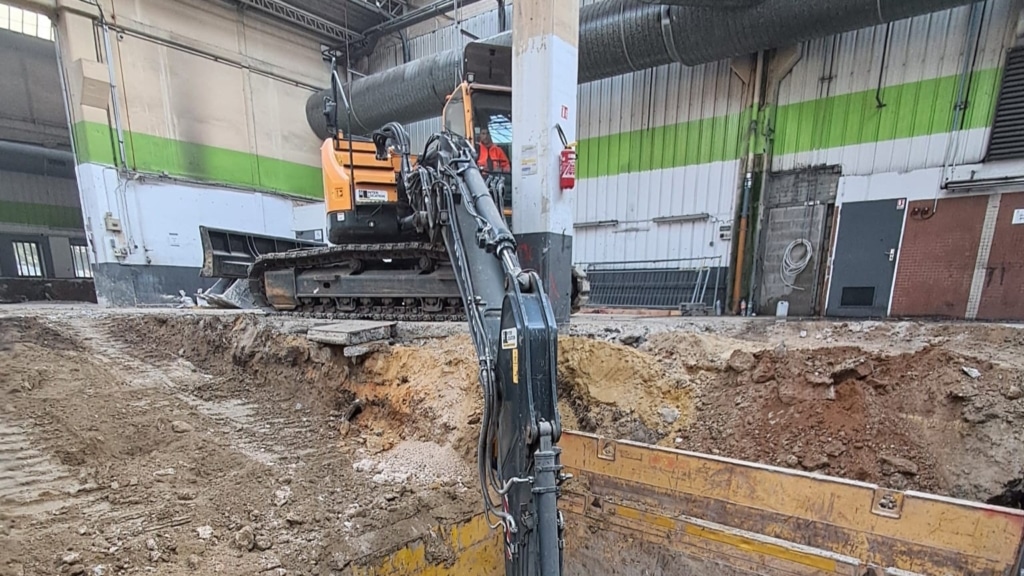
The first challenge stems from the site’s environment itself. The work must be carried out in confined spaces while preserving the existing structures. To access the contaminated areas, the teams had to dig deep trenches—sometimes up to 7 meters—using specialized equipment to ensure the safety of the operations.
A multi-step approach
The treatment involves a combination of techniques tailored to the nature of the contamination:
– Excavation of the most contaminated soil
– Disposal through specialized channels
– Pumping of hydrocarbons from the groundwater surface
– Additional in-depth treatment
This phased approach allows each area to be treated according to its specific characteristics.
A Major Environmental Challenge
Despite the technical complexity of the project, the goal remains simple: to stop pollution and restore the quality of the environment in a sustainable way.
By limiting the risk of oil spills, the project helps protect the soil, groundwater, and future uses of the site.
Restoring a Future for the Site
Beyond the technical work involved, this type of project is part of a broader effort: to restore spaces that have been compromised by their industrial past to a usable state.
In Saint-Denis, decontamination paves the way for the next steps: rehabilitation, transformation, or new uses.
An essential step in supporting the redevelopment of urban areas.